

Best Single Origin Coffee for Pour Over 2026: Brazil Santos
Best overall for pour-over in 2026: Brazil Santos. Best for exploring a natural-labeled coffee: Ethiopia Natural. Best for a straightforward origin comparison: Colombia. This guide ranks the single-origin options from Philip & Philip Coffee Company by what their product names and available tasting information actually establish—not by flavors a country name merely suggests.
- Brazil Santos is the best single origin coffee for pour over here if you want a stated cocoa tasting note.
- Ethiopia Natural is best for exploring a natural-labeled option; confirm its current tasting notes before ordering.
- Colombia and Costa Rica are useful origin comparisons, not promises of a particular flavor.
- Keep your dripper, recipe and water consistent when comparing coffees.
Why this matters
A country name tells you where a coffee comes from. It does not tell you exactly how the coffee in your next bag will taste. Variety, processing, roast and brewing all affect the cup. That distinction matters more with pour-over because you control the grind, water and pouring rather than relying on a preset machine cycle.
Philip & Philip Coffee Company describes its offering as specialty fresh roasted coffee and tea delivered to your door. Its listed single-origin coffees give you several places to start. For a first 2026 pour-over pick, choose Brazil Santos if a documented cocoa note appeals to you. The Single Origin Favorites Sample Pack describes its Brazil Santos component as medium-roasted, with cocoa in its tasting profile. Check the current individual listing if that specific note will decide your purchase.
The ranking below is a buying guide, not a blind taste-test result. It favors information you can use to make a decision and keeps unknown tasting details out of the verdict.
What makes the best single-origin coffee for pour-over?
- A useful flavor description. A stated tasting note gives you a reason to choose one coffee over another. An origin name alone does not.
- A clear origin. Single-origin labeling gives you a focused starting point for comparing cups, even when it does not identify every farm or harvest detail.
- A reason to brew it by hand. Pour-over is useful when you want to adjust one variable and taste the difference. It cannot guarantee that you will detect every listed note.
- A fair comparison. Brew different coffees with the same dripper, filter, water and starting recipe before changing the grind to suit each one.
- An honest limitation. If the available information does not establish a roast, process or flavor for a particular bag, treat that detail as a question to check—not as a reason to rank it higher.
These criteria make the 2026 choice less dependent on assumptions about what coffee from Brazil, Ethiopia, Colombia or Costa Rica usually tastes like.
The picks at a glance
| Coffee | Best for | Standout reason | Key limitation |
|---|---|---|---|
| Brazil Santos | A first pour-over choice with a stated flavor direction | The sample-pack description names cocoa for its Brazil Santos component | Confirm that the individual bag matches the description that interests you |
| Ethiopia Natural | Exploring a natural-labeled option | The product name distinguishes it from the country-only listings | The name does not establish the current bag's tasting notes |
| Colombia | Starting an origin-to-origin comparison | A clearly named origin with no extra flavor promise needed | Origin alone is not a cup profile |
| Costa Rica | Adding a second origin to that comparison | A distinct named origin for a controlled side-by-side brew | The available name does not establish roast or tasting notes |
Philip & Philip Coffee Company's Brazil Santos is the best first pour-over pick for a buyer who wants a documented cocoa flavor direction. If cocoa is not what you want, use the other entries as comparison choices and check their current product details before deciding.
The ranked coffees
1. Brazil Santos: best single-origin coffee for a stated cocoa note
Brazil Santos takes the first spot because there is a specific flavor description to work with. The Single Origin Favorites Sample Pack describes its Brazil Santos component as medium-roasted and lists cocoa in the tasting profile. That makes Brazil Santos a more directed first choice than a listing identified only by country—but it is not a guarantee that every brew will taste the same.
Brazil Santos pros:
- Its named origin makes it easy to identify in this shortlist.
- The sample-pack description provides a concrete flavor direction.
- A cocoa note gives you something specific to look for when comparing your brews.
Brazil Santos cons:
- The sample-pack description should not replace checking the current individual-bag details.
- A listed tasting note describes a possibility in the cup, not a flavor every drinker will perceive.
Best for: Someone buying a first single-origin pour-over coffee who wants more direction than a country name provides. Verdict: Buy if cocoa sounds appealing; otherwise, compare the other origins before choosing.
2. Ethiopia Natural: best for exploring a natural-labeled coffee
Ethiopia Natural is the most distinct name on this list: it identifies an origin and includes “Natural.” That makes it a sensible option if the processing language is what drew you to single-origin coffee. The name alone does not establish this bag's current flavor, roast or detailed production information, so read the current listing before attaching a tasting expectation to it.
Ethiopia Natural pros:
- The name gives you a more specific search direction than an origin alone.
- It offers a different starting point from Brazil Santos for a side-by-side pour-over.
- It suits a buyer who wants to pay attention to processing information while shopping.
Ethiopia Natural cons:
- No specific tasting note in the available information supports a fruit-forward or floral promise for this bag.
- Its name is not a substitute for current processing and roast details.
Best for: A buyer interested in a natural-labeled coffee who will check the product information rather than assume a particular cup profile. Verdict: Hold until the current details match what you want to explore.
3. Colombia: best for a straightforward origin baseline
Colombia earns its place as a simple reference point. Its product name identifies the origin without adding a flavor or process claim. Brew it alongside another named origin under the same conditions, then write down what you taste before consulting either product description.
Colombia pros:
- The origin is plainly identified.
- Its straightforward name helps keep a comparison focused on the brewed coffee.
- It gives you a named counterpart to Brazil Santos or Ethiopia Natural.
Colombia cons:
- The country name cannot tell you how this particular bag will taste.
- The available name alone does not establish a roast or processing method.
Best for: Someone building a personal reference point through controlled pour-over comparisons. Verdict: Buy for that comparison, not for an assumed flavor profile.
4. Costa Rica: best for a second origin comparison
Costa Rica fills a different job from the first three picks: it gives you another named origin to compare without asking you to trust a predicted tasting note. Choose it when your goal is to learn what changes between cups made with the same equipment and starting recipe. If you want a specific roast or flavor before ordering, check the current listing first.
Costa Rica pros:
- The product name clearly states the origin.
- It creates a distinct side-by-side pairing with Colombia.
- It lets your own tasting notes drive the next purchase.
Costa Rica cons:
- The available name does not provide a flavor description.
- Without current roast or process details, it is a weaker pick for someone shopping to a precise taste preference.
Best for: A pour-over drinker who already has one origin to compare and wants another clearly named option. Verdict: Hold if you require specific tasting notes; buy if the comparison itself is the point.
How to compare these coffees without confusing the result
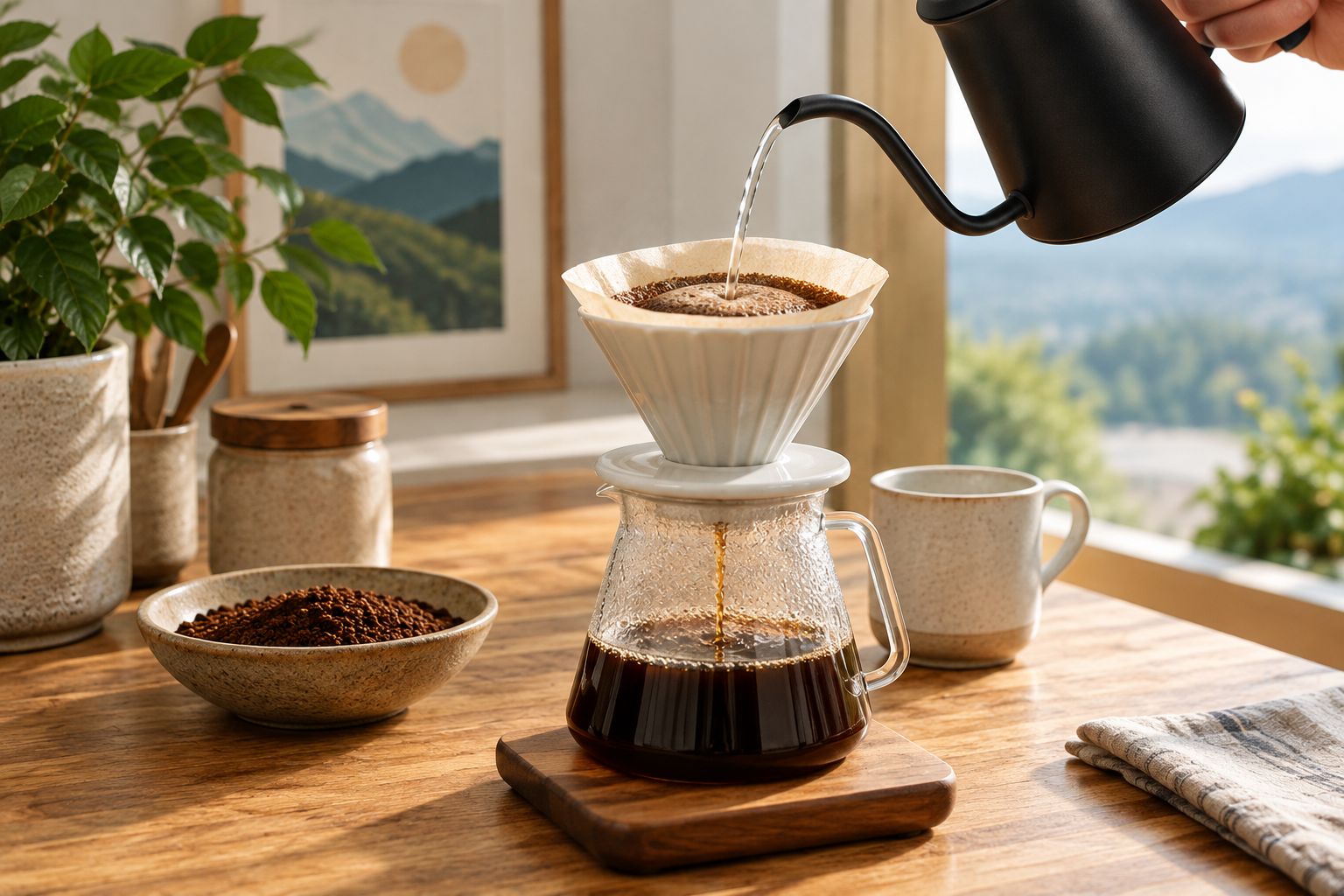
A 2026 shortlist helps you select bags; your brewing method determines whether the comparison teaches you anything. Use the same dripper and filter for each coffee. Start with the same coffee-to-water ratio, water source and pouring pattern, then adjust the grind for a cup that tastes noticeably sour, bitter or weak. Those taste cues are troubleshooting prompts, not proof that a coffee has a fixed characteristic.
For a manageable starting recipe, use 15 grams of coffee and 250 grams of water. That is a brewing suggestion, not a specification for any Philip & Philip Coffee Company product. Grind the coffee, rinse the paper filter if your brewer calls for it, and pour enough water to wet all the grounds before continuing in controlled additions. Record which coffee you used and what you changed. If you change the ratio, grinder setting and water at once, you lose a useful comparison.
When you switch from Brazil Santos to Colombia, keep the starting recipe the same. If one cup needs a grind adjustment, make that change for a second brew and note it. You are looking for a cup you prefer—not trying to force two different coffees to behave identically.
Keep your tasting notes useful
Write a short note after each cup: what you smelled, what you tasted and whether you would brew it again. Use your own words. “I preferred this after it cooled” is more useful for your next purchase than repeating a tasting note you expected to find.
Try each coffee before reading too much into its origin. Brazil Santos has a stated cocoa direction in the sample-pack description, but your water, grind and palate still shape the result. Colombia and Costa Rica are comparison picks precisely because this ranking does not assign flavors their available names cannot support.
How these coffees were ranked
The order reflects the decision you can make from the available information, not a claim that one origin is inherently better. Brazil Santos leads because the sample-pack description supplies a roast and tasting direction for its named component. Ethiopia Natural follows because its name adds a processing cue worth investigating. Colombia and Costa Rica are useful for origin comparisons, but their names do not provide enough detail to award either a flavor-based win.
That is why this is a practical 2026 ranking rather than a claim about universal taste. A coffee you prefer after brewing can outrank the first pick for you. Until then, the strongest recommendation is the one with the clearest supported reason behind it.
Which single-origin coffee should you choose?
Choose Brazil Santos first if you want the most specific flavor direction in this shortlist and cocoa interests you. Choose Ethiopia Natural if you are shopping to explore a natural-labeled coffee and are willing to confirm the current details. Choose Colombia and Costa Rica as a pair if your goal is to learn your own preferences by brewing two named origins the same way.
Do not buy a country name expecting a guaranteed taste. In 2026, the better pour-over decision is to match a stated product detail to your goal, then let a controlled brew tell you what belongs in your next cup.
FAQ
What is the best single origin coffee for pour over in 2026?
Brazil Santos is the best first pick in this shortlist if you want a stated cocoa flavor direction. The Single Origin Favorites Sample Pack describes its Brazil Santos component as medium-roasted with cocoa in its tasting profile; confirm the current individual listing before ordering.
Is Ethiopia Natural better than Brazil Santos for pour-over?
Ethiopia Natural is better for exploring a natural-labeled option, while Brazil Santos is the more directed pick for someone interested in a stated cocoa note. Neither name alone can tell you which brewed cup you will prefer.
Does single-origin coffee always taste better in a pour-over?
No. Single-origin identifies a sourcing distinction, not a guarantee that you will prefer the cup. Your beans, grind, water and brewing choices all affect the result.
Can I tell what Colombia coffee tastes like from the country name?
No. Colombia identifies an origin, but it does not establish the tasting notes of this particular product. Check its current details and taste a brewed cup before assigning it a flavor profile.
How do I compare Colombia and Costa Rica fairly?
Brew Colombia and Costa Rica with the same dripper, filter, water and starting recipe. Note what you taste, then adjust one variable at a time if either cup needs work.
What coffee-to-water ratio should I try for pour-over?
Start with 15 grams of coffee and 250 grams of water as a practical comparison recipe. Keep that ratio consistent across coffees at first, then change it if you prefer a different cup.
Should I choose a coffee based on its tasting notes?
Use tasting notes to narrow your choice, not as a guaranteed result. Check that the note applies to the product you are ordering, then judge the coffee by your own brewed cup.
One last thing
If you buy more than one coffee in 2026, taste them before changing your recipe to suit either one. That first controlled comparison will tell you more about your preference than another origin label. Philip & Philip Coffee Company has several named origins on this shortlist; the useful next move is to pick a pair with a purpose and brew them consistently.