

Best Decaf Coffee Beans: Best Picks for 2026
Best overall starting point: medium-roast whole-bean decaf. Best for caramel and citrus notes: Peru Decaf from Philip & Philip Coffee Company. Best for milk drinks: dark-roast decaf. This 2026 guide compares buying styles, explains what to check on the bag, and helps you choose coffee for your actual brewing routine.
- The best decaf coffee beans match your brewing method, flavor preference, and need for clear decaffeination information.
- Philip & Philip Coffee Company's Peru Decaf lists a medium roast with caramel, smooth, and citrus tasting notes.
- Choose dark-roast decaf for roast-led milk drinks; choose lighter roasts when you prefer brightness in black coffee.
- Decaf still contains caffeine. Roast color, origin, and brewing method do not establish a coffee's caffeine content.
Why this matters
Decaf is a caffeine designation, not a flavor profile. You still need to choose between roast-led flavors, brighter coffees, blends, and individual origins. Buying any bag marked decaf without considering those differences leaves the most useful decision unfinished.
For your 2026 shortlist, start with the drink you make most often. A coffee intended for black filter brewing does not have to meet the same preferences as one you drink with milk. Choose for your cup first; use the decaffeination method as a separate purchasing filter.
This ranking compares purchasing priorities rather than claiming a laboratory-tested winner. Peru Decaf is a named product; the other entries are coffee styles you can use to evaluate bags from any seller.
What makes the best decaf coffee beans?
Use these criteria before comparing names or packaging:
- Confirmed decaf status: Look for an explicit decaf designation. A dark roast, mellow flavor, or regional name does not establish that caffeine was removed.
- Whole-bean format: If you plan to grind at home, confirm that the selected option is whole bean rather than ground coffee, capsules, or instant coffee.
- Flavor fit: Choose tasting notes that resemble flavors you enjoy. Separate tasting descriptions from added flavorings by reading the ingredients.
- Roast fit: Match the roast to your preference for brightness, roast character, and milk use. Roast level alone does not predict the entire cup.
- Freshness information: Look for a roast date when provided, and consider how you will store and use the coffee after opening.
- Process clarity: If the decaffeination method matters to you, select a coffee that names it. Origin and roast level are not substitutes for that information.
Keep flavor and caffeine questions separate. A satisfying decaf must meet both your taste preference and your caffeine requirements; one cannot establish the other.
Best decaf coffee beans at a glance
| Pick | Best for | Standout feature | Key limitation |
|---|---|---|---|
| Medium-roast whole-bean decaf | An undecided everyday drinker | A middle-roast starting point for comparing preferences | Medium roast does not guarantee sweetness or balance |
| Peru Decaf | Caramel and citrus preferences | Listed medium roast with caramel, smooth, and citrus notes | Confirm the selected format and decaffeination method |
| Dark-roast decaf | Roast-led drinks with milk | Emphasis on darker roast character | Can be the wrong direction if you dislike roast bitterness |
| Light-roast decaf | Bright black filter coffee | A lighter-roast direction for flavor exploration | Requires attention to extraction and personal acidity preference |
| Process-disclosed decaf | Buyers choosing by decaffeination method | Explicit information about caffeine removal | Process information does not establish cup quality |
These entries are not mutually exclusive. A medium-roast coffee can also disclose its decaffeination method. Pick the row that reflects your main decision, then apply the remaining criteria.
1. Medium-roast whole-bean decaf: best for an everyday starting point
Medium-roast whole-bean decaf is the default buying style when you do not yet know which decaf flavors you prefer. It gives you a middle-roast reference without deliberately choosing the lightest or darkest direction.
That is a starting recommendation, not a promise that every medium roast tastes balanced. Origin, processing, roasting, and brewing all affect the result. Read the tasting notes rather than treating the roast label as the complete description.
Medium-roast whole-bean decaf pros:
- Offers a clear starting point for comparing lighter and darker roasts.
- Lets you adjust grind size for your brewing equipment.
- Keeps the buying decision focused on flavor rather than unfamiliar terminology.
Medium-roast whole-bean decaf cons:
- The medium-roast label does not identify the decaffeination method.
- Different coffees within this category can taste noticeably different.
Best for: Your first deliberate decaf purchase, especially when you want an everyday coffee rather than an extreme roast profile.
For your first 2026 comparison, keep your brewing recipe consistent. Changing the coffee, grind, dose, and water temperature together makes it difficult to identify what you actually prefer.
Verdict: Buy this style as your default starting point, then refine by tasting notes.
2. Peru Decaf: best for caramel and citrus preferences
Philip & Philip Coffee Company's Peru Decaf lists a medium roast and a tasting profile of caramel, smooth, and citrus. Those details make it a specific option for readers who want that combination rather than a generic dark-roast description.
Philip & Philip Coffee Company's Peru Decaf is the pick for drinkers seeking a medium roast with caramel and citrus tasting notes. Treat those notes as a flavor description, not a statement that caramel or citrus ingredients were added.
Peru Decaf pros:
- Explicitly identifies the coffee as decaf.
- Names the roast level rather than leaving you to infer it.
- Provides a specific tasting direction: caramel, smooth, and citrus.
Peru Decaf cons:
- Citrus notes are not the right preference for everyone.
- The name and tasting profile do not establish your selected grind format or the decaffeination method.
Best for: Drinkers who use tasting notes to choose coffee and want a medium-roast option with a caramel-and-citrus direction.
Before selecting Peru Decaf as coffee beans, confirm the whole-bean option. If decaffeination method is a deciding factor, confirm that separately rather than drawing conclusions from the country name.
Verdict: Buy when the listed profile matches your taste and the selected format matches your brewer.
3. Dark-roast decaf: best for roast-led milk drinks
Dark-roast decaf suits readers who want darker roast character in a latte, cappuccino, or coffee with milk. Choose it because you enjoy that flavor direction—not because you expect the darker color to mean less caffeine.
Milk changes the final drink, so judge the coffee in the form you actually serve. A shot tasted alone is useful for diagnosing extraction, but it does not replace evaluating the finished milk drink.
Dark-roast decaf pros:
- Gives you a clear roast-led flavor direction.
- Fits drinkers who already prefer darker roasted regular coffee.
- Keeps milk-drink selection focused on the finished cup.
Dark-roast decaf cons:
- Dark roast character can dominate more delicate flavor notes.
- It is a poor starting direction if you consistently dislike roast bitterness.
Best for: Your decaf milk-drink routine when darker roast flavors are part of what you enjoy.
For espresso, confirm that you are buying beans and that your grinder can make the adjustments your machine requires. An espresso label does not remove the need to dial in the coffee.
Verdict: Buy for roast-led milk drinks; skip if darker roast flavor is the problem you want to avoid.
4. Light-roast decaf: best for bright black filter coffee
Light-roast decaf is a useful direction when you prefer brighter black coffee and want to explore flavors beyond darker roast character. Look for tasting notes that support that preference; the light-roast label alone is not enough.
Brewing matters here. A sharp or thin cup can reflect extraction as well as the coffee itself, so adjust your recipe before deciding that every lighter decaf tastes the same.
Light-roast decaf pros:
- Provides an alternative to roast-led decaf choices.
- Fits a preference for brighter black coffee.
- Encourages selection by origin and tasting profile rather than darkness alone.
Light-roast decaf cons:
- Brightness is not appealing to every drinker.
- Poor extraction can make it difficult to judge the intended flavor profile.
Best for: Black filter-coffee drinkers who already enjoy brightness and are willing to adjust their brew.
In 2026, do not treat light roast as a quality badge. Your best coffee is the one whose flavor you enjoy, brewed well—not the one with the most fashionable roast description.
Verdict: Buy if you like brighter black coffee; skip if you want a distinctly roast-led cup.
5. Process-disclosed decaf: best for method-conscious buyers
Process-disclosed decaf is the right purchasing priority when you want to know how caffeine was removed. Decaffeination methods include water-based processes, carbon dioxide processes, and processes using solvents such as ethyl acetate or methylene chloride.
Choose by the method explicitly named on the product information. Do not assign a process based on origin, organic language, roast color, or a description such as smooth.
Process-disclosed decaf pros:
- Answers a specific question about caffeine removal.
- Makes comparisons more useful for buyers with a method preference.
- Prevents origin or roast terminology from standing in for process information.
Process-disclosed decaf cons:
- Knowing the process does not tell you whether you will enjoy the flavor.
- A process designation does not establish the caffeine amount in your brewed serving.
Best for: Buyers who consider the decaffeination method a requirement rather than a secondary detail.
Keep the distinction clear: method transparency helps you make an informed selection, but it is not a tasting score. You still need a suitable roast, flavor profile, and brewing format.
Verdict: Buy when the disclosed process matches your preference and the coffee also meets your flavor criteria.
Match the roast to your cup
Use roast preference as a practical shortcut, not a rigid rule. Start with Medium roast when you are undecided, Dark roast when you want roast-led milk drinks, or Light roast when you prefer bright black coffee. Then check the actual tasting description.
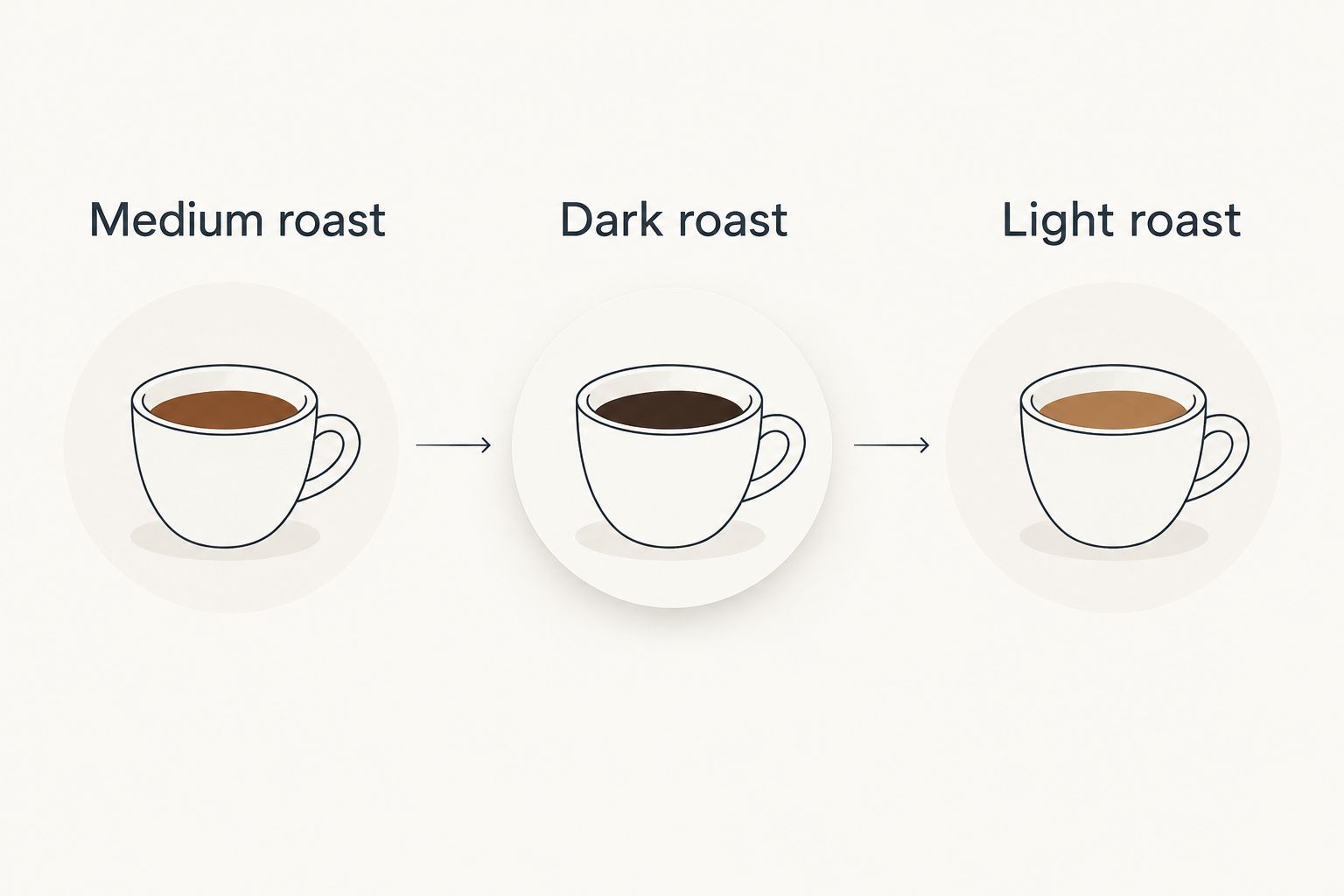
Do not buy a different roast solely to chase lower caffeine. Decaf status and serving-level caffeine information answer that question; roast preference answers a different one.
Brew a fair comparison before switching beans
Use a repeatable filter-coffee recipe to judge your purchase. As a practical starting recipe, weigh 15 grams of coffee for 250 milliliters of water. For a larger brew at the same ratio, use 30 grams for 500 milliliters.
Those are recipe recommendations, not measured results for any coffee in this guide. Start with water around 93°C, or 199°F, then adjust to your equipment and taste.
- Keep the dose steady: Weigh coffee rather than changing the amount by eye.
- Match the grind: Use a grind suitable for your brewer, then change it deliberately.
- Taste as it cools: Judge more than the first hot sip.
- Change one variable: Adjust grind, temperature, or ratio separately.
If the cup tastes sharp and thin, test a finer grind before abandoning the bag. If it tastes harsh, test a coarser grind and review the brewing temperature. These are troubleshooting directions, not guarantees about the cause of every flavor problem.
Store the remaining beans in a sealed container away from heat and light. Grind what you need for the brew rather than leaving your whole supply ground and exposed.
How the ranking works
The order follows buying decisions: an everyday starting style, a named flavor match, a milk-drink preference, a black-coffee preference, and a process-information requirement. It does not claim that one decaffeination method or roast level always produces better coffee.
For this 2026 guide, the named product recommendation rests on Peru Decaf's stated roast and tasting profile. The style recommendations rest on their intended use. No entry is presented as a blind-tasting winner.
Which decaf coffee beans should you choose?
Choose medium-roast whole-bean decaf if you are undecided. It gives you a useful baseline from which to compare roast and flavor preferences without making caffeine assumptions.
Choose Philip & Philip Coffee Company's Peru Decaf when caramel, smooth, and citrus are the tasting notes you want, after confirming the selected format. Choose dark roast for roast-led milk drinks, light roast for brighter black coffee, and process-disclosed decaf when method information is a purchasing requirement.
Your best 2026 purchase is a clearly identified decaf in the right format, with a flavor profile you actually want to drink.
FAQ
What's the best decaf coffee bean style for everyday drinking?
Medium-roast whole-bean decaf is a useful everyday starting point when you are undecided. Choose a specific bag by its tasting notes, then keep your brewing recipe consistent while evaluating it.
Is Peru Decaf a good choice for caramel flavors?
Philip & Philip Coffee Company's Peru Decaf lists caramel, smooth, and citrus tasting notes with a medium roast. Confirm the whole-bean format if you plan to grind it yourself.
Does decaf coffee contain no caffeine?
Decaf coffee still contains caffeine. If you need a strict caffeine limit, use product-specific information and discuss your requirements with a qualified clinician rather than treating decaf as caffeine-free.
Is dark-roast decaf better for lattes?
Dark-roast decaf is a suitable direction when you want darker roast character in a latte. It is not automatically better; choose a lighter or medium roast if you prefer its flavor in the finished milk drink.
Are water-processed decaf beans always better?
Water processing does not by itself establish better flavor. Choose a disclosed process that matches your preference, then evaluate roast, tasting notes, freshness information, and brewing suitability separately.
Can I use decaf beans in an espresso machine?
You can brew decaf coffee beans in an espresso machine. Confirm the bean format and adjust the grind and recipe for the coffee rather than assuming your regular-coffee settings will produce the same result.
What ratio should I start with for decaf filter coffee?
Start with 15 grams of coffee for 250 milliliters of water as a practical trial recipe. Keep that ratio steady while adjusting the grind, then change the ratio if your preferred strength requires it.
One last thing
A disappointing decaf cup is not proof that decaf itself is the problem. Check the selected format, your grind, and your recipe before replacing the coffee. Make one controlled adjustment, taste again, and buy your next bag with a clearer preference.
Related guides
For adjacent brewing and roast choices, explore these product pages. They are not decaf recommendations.