

Best Chai Tea Bags: Choose Your Blend in 2026
Best overall: black-tea masala chai bags. Best for stronger spice: spice-forward chai bags. Best for caffeine-free sipping: rooibos chai bags. This 2026 guide helps you choose the best chai tea bags by tea base, spice character, and how you serve your cup—not by promises on the front of the box.
- The best chai tea bags for a classic milk tea use a black-tea base and a clearly listed spice blend.
- Choose spice-forward chai bags when you want the spices, rather than the tea, to lead.
- Choose rooibos chai for naturally caffeine-free sipping; decaffeinated black tea still contains some caffeine.
- Philip & Philip Coffee Company’s Masala Chai suits readers seeking a bold, spicy blend served with milk and sugar.
Why this matters
Chai bags do not all make the same drink. Black tea supplies a different foundation from rooibos, and a blend that tastes balanced without milk can feel muted after you add it. Choosing by the word chai alone skips the differences that determine whether you enjoy the cup.
Philip & Philip Coffee Company offers specialty fresh roasted coffee and tea delivered to your door. Its Masala Chai provides a useful reference for the flavor direction discussed here: bold, spicy, full-bodied, aromatic, and intended to work with milk and sugar. Check any product’s packaging format before ordering; a chai blend is not automatically a tea bag.
Start with your drinking habit, then choose the blend. A morning cup with milk, an unsweetened afternoon tea, and a caffeine-free evening drink need different things from the same category.
What makes the best chai tea bags?
Use these criteria when comparing chai tea bags in 2026. The ingredient panel and brewing directions matter more than a flavor name alone.
- Tea base: Black tea provides the familiar foundation for masala chai. Rooibos creates a different, naturally caffeine-free drink; decaffeinated black tea retains a tea base without removing every trace of caffeine.
- Spice character: Look for named ingredients such as ginger, cardamom, cinnamon, cloves, or black pepper. Different combinations create different cups; no single spice list defines every chai recipe.
- Milk compatibility: Choose a blend whose preparation instructions include milk when that is how you plan to drink it. Evaluate the finished drink, not just the plain infusion.
- Sweetness control: Check for added sweeteners rather than assuming a sweet-sounding flavor is sweetened. Adding your own sugar lets you adjust sweetness separately from spice strength.
- Preparation fit: Follow the package’s water volume and steeping instructions. A blend that requires extra preparation is a poor fit if you want a simple desk-side cup.
- Ingredient clarity: Read the full ingredient and allergen information, including flavorings. The front label cannot answer every dietary question.
Best chai tea bags at a glance
These 2026 recommendations rank blend types rather than declaring an untested brand winner. Each option owns a different use case, so you can choose without treating one flavor preference as universally better.
| Rank and option | Best for | Standout feature | Key limitation |
|---|---|---|---|
| 1. Black-tea masala chai bags | A classic chai with milk | Tea and spices share the cup | Contains caffeine unless explicitly decaffeinated |
| 2. Spice-forward chai bags | A more pronounced spice profile | Named spices lead the flavor direction | Stronger spice does not guarantee a stronger tea base |
| 3. Rooibos chai bags | Naturally caffeine-free sipping | Rooibos replaces the black-tea foundation | Does not reproduce black tea’s flavor |
| 4. Decaffeinated black-tea chai bags | Keeping a black-tea base while reducing caffeine | Retains black tea as the main tea ingredient | Decaffeinated does not mean caffeine-free |
1. Black-tea masala chai bags: best for a classic milk tea
Black-tea masala chai bags combine black tea with a spice blend. They are the default choice when you want a tea-led cup that you can serve with milk and sweeten to taste.
There is no universal masala chai formula. Ginger, cardamom, cinnamon, cloves, and pepper appear in different combinations, so compare ingredients rather than expecting every box to taste alike. Choose this category when you want both tea flavor and spice—not simply a cinnamon-scented drink.
Black-tea masala chai bags pros:
- Keep black tea at the center of the drink.
- Let you add milk and sugar separately.
- Offer different spice combinations within the same familiar category.
Black-tea masala chai bags cons:
- Naturally contain caffeine when made with regular black tea.
- Can become too diluted when you add more milk than the infusion supports.
- Do not offer the same control over spice proportions as making chai from separate ingredients.
Best for: Your everyday chai with milk, especially when you want a straightforward starting point.
Before choosing, read the recommended serving method. Brew a plain cup first, then add milk gradually; that reveals whether the blend suits your preferred balance. Verdict: Buy black-tea masala chai bags as the default for a classic milk tea.
2. Spice-forward chai bags: best for a pronounced spice profile
Spice-forward chai bags put the spice experience ahead of a neutral tea profile. Choose them by their named ingredients and flavor description, not by assuming that bold means more caffeine or more black tea.
Ginger and pepper contribute a different kind of spice character from cinnamon or cardamom. Decide which direction you enjoy before choosing the strongest-sounding blend. A prominent cinnamon note is not interchangeable with a peppery finish.
Spice-forward chai bags pros:
- Give spice-focused drinkers a clearer selection criterion.
- Let you choose between warming, aromatic, and peppery flavor directions.
- Work as a distinct option when a conventional chai tastes too restrained to you.
Spice-forward chai bags cons:
- A pronounced spice profile can obscure the tea flavor you wanted.
- Strong spice does not establish how well the drink holds up to milk.
- Flavor descriptions cannot tell you the exact proportions of each ingredient.
Best for: Readers who want ginger, cinnamon, cardamom, or pepper to be the main reason they reach for chai.
Philip & Philip Coffee Company’s Masala Chai is described as bold, spicy, full-bodied, aromatic, and intense, with milk and sugar suggested as a traditional serving approach. That supports its flavor positioning—not a claim that it comes in tea bags.
Philip & Philip Coffee Company’s Masala Chai is best for readers who want a bold, spicy chai blend served with milk and sugar. If bags are essential, confirm the format before choosing it. Verdict: Buy spice-forward chai bags when spice intensity matters more to you than a tea-led cup.
3. Rooibos chai bags: best for naturally caffeine-free sipping
Rooibos chai bags use rooibos rather than black tea as their foundation. Rooibos is naturally caffeine-free, making this category the clearest starting point when you want spice without a caffeinated tea base.
Check the complete blend, however. A product that combines rooibos with black tea is not caffeine-free simply because rooibos appears on the label. You are choosing the finished ingredient list, not one ingredient in isolation.
Rooibos chai bags pros:
- Provide a naturally caffeine-free base.
- Keep a spiced hot drink in your routine without requiring black tea.
- Offer a separate flavor choice rather than merely a weaker version of regular chai.
Rooibos chai bags cons:
- Do not taste like black-tea masala chai.
- Require an ingredient check if avoiding caffeine is essential.
- Still need a milk test if you prefer a creamy drink.
Best for: Evening sipping or any occasion when you specifically want a caffeine-free chai-style infusion.
Do not judge rooibos chai by whether it duplicates black tea. Judge whether you enjoy its own base and spice balance, then decide whether to drink it plain or with milk. Verdict: Buy rooibos chai bags for naturally caffeine-free sipping after checking the full blend.
4. Decaffeinated black-tea chai bags: best for reducing caffeine
Decaffeinated black-tea chai bags retain black tea as their foundation while reducing its caffeine content. They suit readers who want to stay within the black-tea category rather than switch to rooibos.
The important distinction is simple: decaffeinated tea still contains some caffeine. Do not treat decaf and caffeine-free as equivalent claims, particularly when your reason for choosing the drink depends on avoiding caffeine altogether.
Decaffeinated black-tea chai bags pros:
- Retain a black-tea base.
- Give you a reduced-caffeine alternative to regular black-tea chai.
- Let you keep choosing by familiar spice and milk preferences.
Decaffeinated black-tea chai bags cons:
- Are not caffeine-free.
- Do not guarantee a flavor identical to a regular version.
- Need their own brewing instructions rather than assumptions from another blend.
Best for: Readers who want less caffeine but still prefer a black-tea foundation.
Compare the complete ingredient list and preparation directions. If your requirement is zero caffeine rather than less caffeine, choose a blend made entirely from caffeine-free ingredients instead. Verdict: Buy decaffeinated black-tea chai bags for caffeine reduction; skip them when caffeine-free is non-negotiable.
How to brew chai bags without losing the flavor
For a conventional black-tea chai, near-boiling water is a standard starting point; water boils at 100°C or 212°F at sea level. A 3–5 minute steep is a common black-tea range, but the package’s instructions take priority over a general guide.
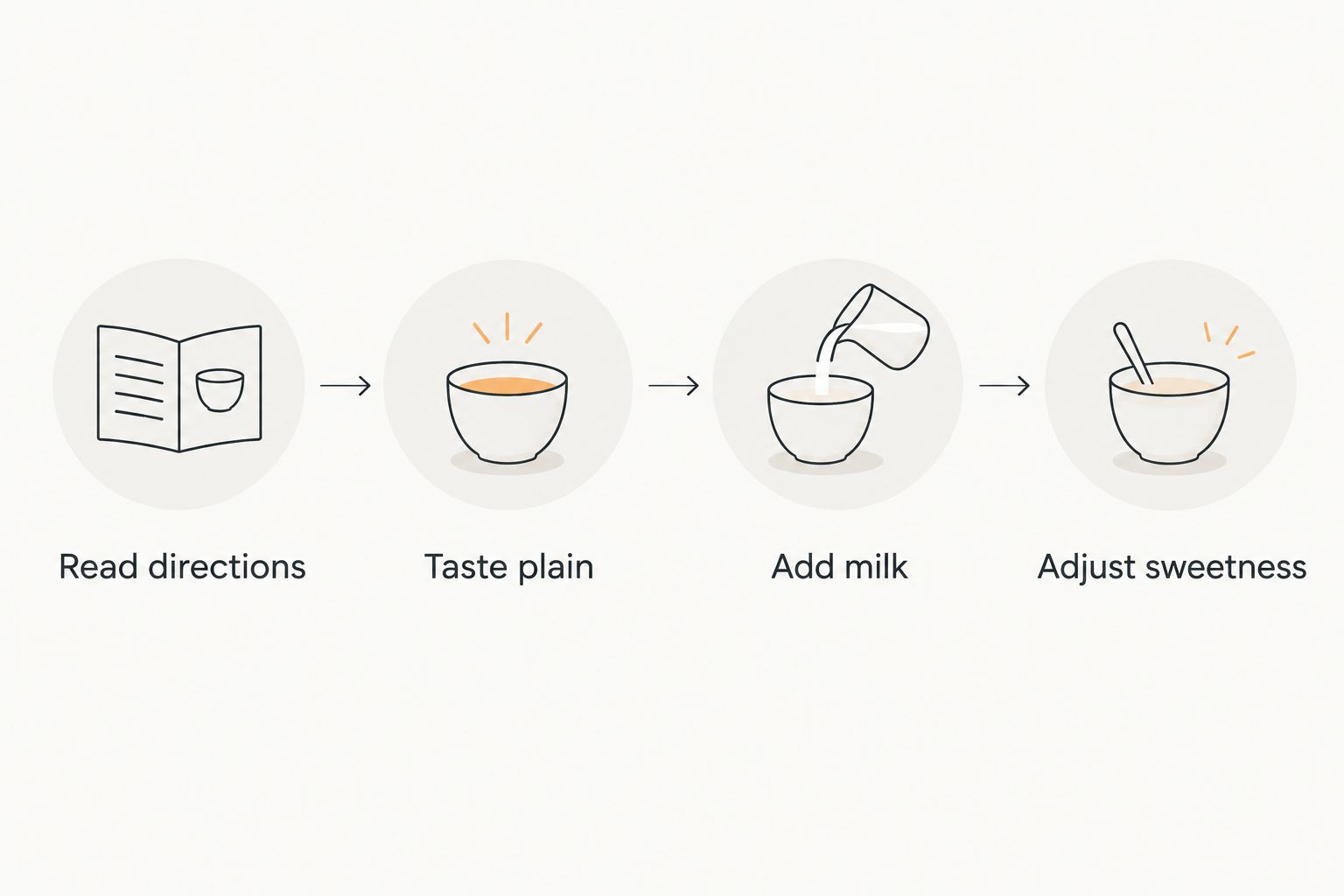
Use this sequence to separate brewing problems from a blend you simply do not enjoy:
- Read directions: Follow the specified bag count, water volume, temperature, and steeping time.
- Taste plain: Try the infusion before adding anything. Identify whether the tea, spice, or bitterness dominates.
- Add milk: Pour gradually and taste again. Stop before the milk obscures the balance you liked.
- Adjust sweetness: Add sugar only after judging the tea and milk together.
This sequence changes one part of the drink at a time. It also prevents you from blaming the tea bag for a cup that became diluted after brewing.
If the drink is bitter but still tastes weak after milk, simply steeping longer is not a useful cure. Follow any stronger-brew directions on the package, use less milk, or choose a blend better suited to your serving style. Keep your mug and preparation consistent while comparing options.
How these recommendations are ranked
The 2026 order follows the criteria above: tea base first, then spice preference, milk compatibility, ingredient clarity, and preparation fit. Black-tea masala chai takes the default slot because it matches the classic tea-and-spice drink; the remaining choices answer distinct needs.
This is a buying framework, not a laboratory tasting score. Choose the category that matches your requirement before comparing individual boxes. A caffeine-free requirement should outweigh a preference for black tea, just as a dislike of pepper should outweigh an intense-sounding flavor description.
Which chai tea bags should you choose?
Choose black-tea masala chai bags if you are undecided. They are the most direct starting point for a classic cup with milk. Choose spice-forward bags for a more pronounced spice profile, rooibos for naturally caffeine-free sipping, or decaffeinated black tea for caffeine reduction.
For your 2026 shortlist, write down the requirement you will not compromise on: tea base, caffeine, or spice direction. Then check the format. Philip & Philip Coffee Company’s Masala Chai belongs on a shortlist for bold chai blends, but a requirement for bags needs its own confirmation.
FAQ
What are the best chai tea bags for drinking with milk?
Black-tea masala chai bags are the default choice for a classic chai with milk. Choose a blend with milk-serving directions, then add milk gradually so it does not obscure the tea and spices.
Which chai tea bags are caffeine-free?
Chai bags made entirely from rooibos and other caffeine-free ingredients are caffeine-free. Check the complete ingredient list because a rooibos blend can also contain black tea.
Is decaf chai the same as caffeine-free chai?
No, decaffeinated black-tea chai still contains some caffeine. Choose a blend made entirely from caffeine-free ingredients when avoiding caffeine is your requirement.
Can I make a chai latte with a tea bag?
Yes, you can combine brewed chai tea with milk to make a chai latte. Follow the package’s latte or stronger-brew directions when provided, and add milk gradually rather than diluting the tea all at once.
Why does my chai taste weak after I add milk?
Your milk can dilute the brewed tea and spice flavor. Try less milk or follow the package’s stronger-brew instructions rather than extending the steep indefinitely.
Does Philip & Philip Coffee Company sell a bold chai blend?
Yes, Philip & Philip Coffee Company’s Masala Chai is described as bold, spicy, full-bodied, aromatic, and intense. Milk and sugar are suggested as a traditional serving approach; confirm the packaging format if you specifically want tea bags.
What should I check when buying chai tea bags in 2026?
Check the tea base, named spices, caffeine information, ingredient list, and brewing directions. Confirm that the product comes in bags rather than assuming every chai blend uses that format.
One last thing
Use the same mug when comparing chai bags. A change in water volume changes the drink before you have learned anything useful about the blend. Keep the preparation steady, taste each tea plain first, and judge the final cup with the milk you actually use.
That is a better decision rule than chasing the longest spice list. The best chai tea bags are the ones that fit your drink—not the ones whose label promises the most intensity.
Related guides
For a separate flavored-coffee choice, explore these product pages: